AI in Museums: Are We on the Verge of a Breakthrough Like the Internet in the 1990s?
Over the past 30 years, the introduction of new technology has had a significant impact on the museum and cultural sector. Every innovation—from the early days of the web to the rise of social media and big data—has gone through a phase of skepticism, public debate, and ultimately integration. Given the current developments in AI, I find myself wondering: Where do we stand now on this journey within our sector?
Looking Back: How the Web Transformed Museums
The use of AI for audio guides offers numerous advantages:
- 🌍💻 The Web in the 1990s: Originally a niche interest, the Web revolutionized the way museums share information and engage with visitors throughout the 1990s.
- 📱✨ Social media in the 2000s: Platforms like Facebook and Twitter transformed marketing and visitor engagement in museums and became indispensable tools. Today, those platforms may be Instagram or TikTok, but social media is here to stay.
- 📊🔍 Big Data in the 2010s: Big data analytics enabled museums to gain deeper insights into their collections and visitor behavior, and to enhance personalized experiences and operational efficiency.
The current debate on AI in museums:
Today, AI offers enormous potential for the museum and cultural sectors. From curating personalized experiences to automating administrative tasks, the possibilities are vast. Yet, as with previous innovations, artificial intelligence is met with significant concerns—artists and exhibition curators worry about the loss of a human touch and authenticity, while others fear that existing inequalities could be exacerbated.
The Future of AI in Museums: Questions and Considerations
Given the evolution of previous technologies, it feels as though we’re in the equivalent of the web in 1995 or social media in 2008—AI is moving from early adoption to broader integration. But this moment is truly unique because of the sheer number of people involved—both as users and as developers.

Examples of AI in audio guides
The integration of artificial intelligence (AI) into audio guides and multimedia guides offers museums numerous opportunities to enhance the visitor experience. Here are some examples of how AI can be used in these areas.
Personalized audio guide experiences:
AI can be used to personalize audio guides by tailoring content based on visitors’ interests and preferences. This enables a personalized and immersive experience tailored to visitors’ needs.
Multilingual content:
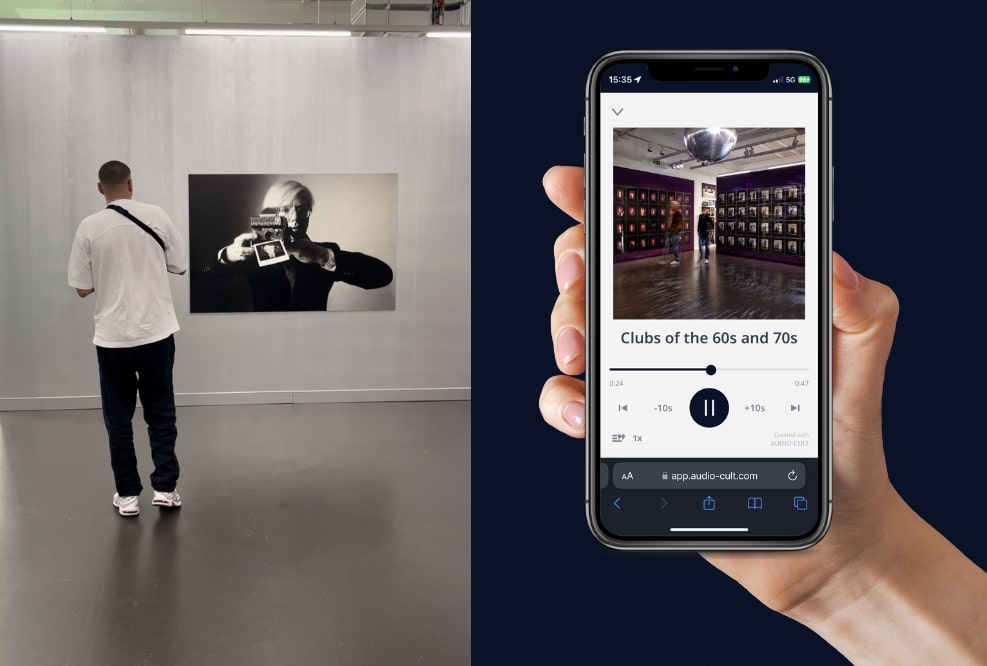
Museumscan use AI to create, translate, and adapt content for their multimedia guides. This allows stories to be presented in different languages, giving diverse visitor groups deeper insights and a more immersive experience. Here is an example with an audio sample: The tour was automatically transcribed and translated using AI, and the accompanying audio in English was also generated by AI.
Interactive and accessible features:
In addition, multimedia guides can, of course, continue to offer interactive and accessible features, such as quizzes, to bring the exhibitions to life. This technology allows visitors to actively engage with the content and develop a closer connection to the exhibited objects.
Why the debate about AI in museums is important
It is important to note that the debate surrounding the use of AI must also take place within our sector. We need to educate ourselves and explore different options so that we can form an informed position.
As we navigate this transformative phase, what can we learn from previous cycles of new media adoption to ensure that the integration of AI in museums is ethical, inclusive, and enriching for everyone’s cultural experience?