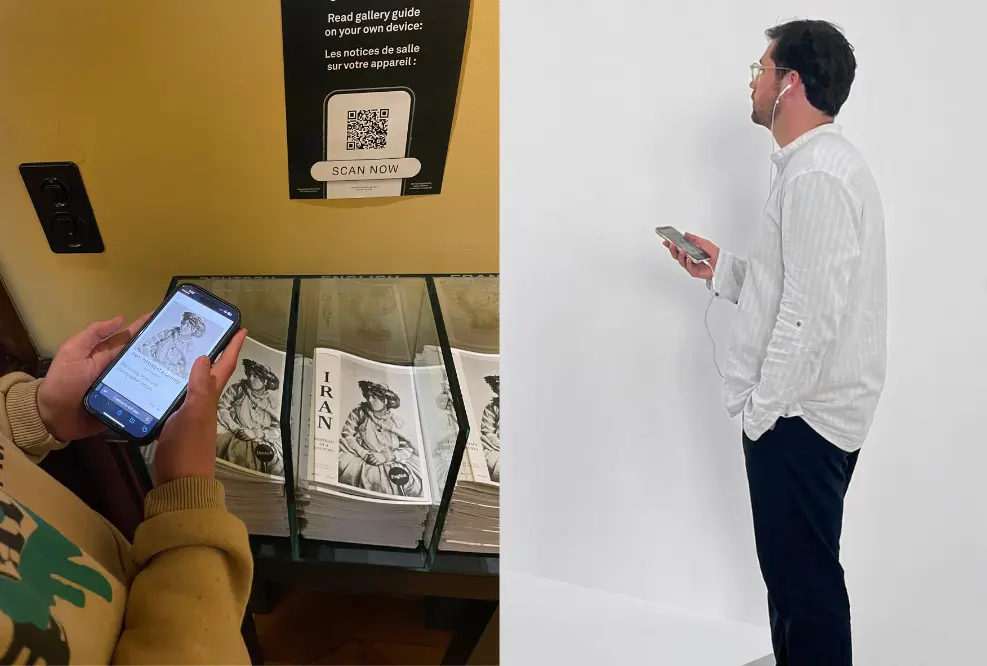
Accessible and multisensory audio guides
Imagine visiting a museum, but instead of simply strolling through the exhibits, you are guided through a symphony of sounds, detailed descriptions and stories, as well as tactile experiences. But why are accessibility and multisensory experiences important? In January 2024, Swissinfo reported that inclusive cultural experiences are virtually impossible for people with disabilities. For many people with disabilities, this is not just a matter of comfort, but of accessibility.
The integration of accessible and multisensory audio guides in museums is revolutionizing the way we experience art and history. In this article, we explore the significance of these innovations and how they make museum visits more accessible and enriching for everyone, using three specific examples from the Gewerbemuseum Winterthur, the Migros Museum of Contemporary Art, and the Museum für Gestaltung.
Accessibility: A Necessity, Not an Option
Accessibility in museums means more than just installing ramps and elevators. It is about creating an inclusive experience that offers all visitors—regardless of their physical or cognitive abilities—the same opportunity to enjoy art and culture. Audio guides play a central role in this. They provide an audio tour of the exhibitions, which is particularly essential for people with visual impairments.
- Audio support: Audio guides can provide detailed descriptions of artworks and exhibits, conveying visual information that would otherwise be lost on people with visual impairments.
- Visual aids: Incorporating sign language can also convey additional information that would otherwise be lost on people with hearing impairments.
Wonnder’s (formerly Audio-Cult) multisensory audio guides expand on the concept of accessible interpretation by engaging multiple senses. These innovative tours offer a more comprehensive and immersive experience that enriches the museum visit for everyone.
3 Examples of Multisensory Approaches in Museums
The Gewerbemuseum Winterthur has implemented innovative measures to ensure accessible education. It offers audio guides designed specifically for people with visual impairments. These guides combine detailed audio descriptions with tactile experiences, allowing visitors to feel the texture and shape of the materials.
- Tactile elements: In addition to audio guides, tactile cues and experiences are useful for conveying additional information or guiding visitors through the exhibition.
- Easy to use: Accessible audio guides are designed to work intuitively on visitors' devices, providing clear, easy-to-understand instructions.
Inclusion is a top priority at the Migros Museum of Contemporary Art. The museum uses audio-descriptive audio guides and videos in sign language that convey both visual and auditory information. These guides provide a comprehensive description of the artworks, turning a visit to the museum into a memorable experience.
The Museum of Design also relies on a variety of educational methods. At the heart of the exhibition Design for All – Diversity as the Norm is five international design studios that incorporate societal diversity into their work and make our environment more accessible. Audio guides from Wonnder are therefore also available for the exhibition. Some of the exhibition’s innovative highlights can thus be discovered through an audio-descriptive tour.
Conclusion: The Future of Museum Experiences
The integration of accessible and multisensory audio guides is a crucial step toward more inclusive museum experiences. They enable all visitors, regardless of their individual abilities, to experience art and culture in all their depth and diversity. There are numerous specialized agencies, initiatives, and funding programs that support such projects. Here are three brief examples:
- Aktion Mensch: In Germany, Aktion Mensch promotes digital inclusion for everyone.
- Center for Cultural Participation: The Center supports innovative projects in Baden-Württemberg that incorporate accessibility and develop new processes.
- Pro Infirmis: Pro Infirmis advocates for the cultural inclusion and participation of people with disabilities in Switzerland. Through its "Fachstelle Kultur inklusiv " project, Pro Infirmis has been pursuing these goals since 2016 and offers a wealth of expertise and guidance. The challenge: securing long-term funding.
- Mediamus: Mediamus is the Swiss association for individuals and institutions active in cultural education in museums and related fields. It offers a wealth of expert knowledge on inclusion and educational outreach.
Regional initiatives are being developed to make culture more accessible. In the Swissinfo report, Stéphanie Zufferey, a member of the executive board at Pro Infirmis, says: “You can provide as much cultural outreach as you want. But if the person themselves doesn’t feel they have the right to participate, they won’t come.”
At Wonnder, we work closely with museum educators and advocacy groups to optimize our offerings to meet as many needs as possible. For museums, this means not only expanding their audience but also enriching the visitor experience beyond mere viewing. The future of museum experiences is multisensory and accessible—and thus more exciting and accessible than ever before.