Digital Strategies in Museums: A Guide to Transformation
Digital transformation is a crucial factor for museums to remain relevant and engaging in today’s world. It enables museums to reach new visitor segments and improve engagement with their audiences.
Ever since ChatGPT, it has become clear that AI will find applications in museums. The use of artificial intelligence, social media, and advanced digital technologies promises not only to transform the visitor experience in museums but also to revolutionize internal processes. But where should a museum even begin? How can museums overcome the challenges of digital transformation without feeling overwhelmed, while ensuring that data protection and user-friendliness are guaranteed?
The Basics of Digital Transformation in Museums
First, of course, one might ask: Why is it important to address digital transformation in museums? By directly addressing these challenges, museums can not only optimize their operational processes and enhance the visitor experience but also take a leading role in the cultural landscape of the digital age.
Increasing accessibility: Digital technologies expand museums’ reach by offering virtual tours and digital collections that are accessible worldwide. Additionally, new opportunities arise for inclusive and barrier-free offerings.
Interactive experiences: The use of modern audio guide systems, augmented reality, and virtual reality can revolutionize the way visitors experience art and culture by creating interactive and immersive experiences.
Personalizing the visitor experience: AI-powered systems can offer personalized recommendations—such as guided tours tailored to visitors’ interests and behavior.
Key Technologies for Museums in the Digital Age
Ten years ago, apps were all the rage. But does my museum need its own app? Many museum apps are rarely downloaded, which often doesn’t justify the investment. But a lot has changed since then. Modern technologies offer museums innovative ways to showcase their collections and enhance the visitor experience. Here are three key technologies that are increasingly being used in museums.
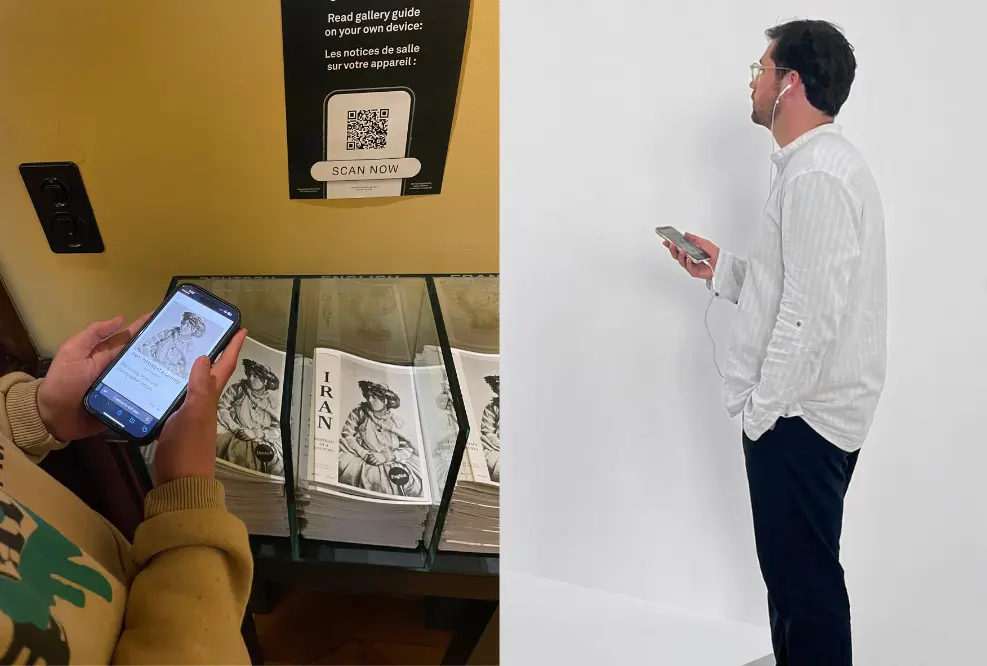
Web apps: Enable an interactive tour of the museum and can provide audio guides, videos, translated texts, and additional information (all of which are also available offline).
An attractive website and social media: Offer visitors the opportunity to have a positive interaction before their visit. It’s all about the basics: The website should make it clear at a glance when the museum is open. Attractive images and short, engaging headlines spark curiosity and invite visitors to explore the exhibitions. Social media accounts like TikTok or Instagram aren’t just filled with the same information; instead, they offer deeper behind-the-scenes insights and an exciting perspective on exhibition themes.
Data analysis and visitor management: Systems for collecting and analyzing visitor data help to better plan exhibitions and optimize marketing strategies. Which stations are actually being used? Which ones are being skipped? Smart museum guides can provide analyses and feedback here. This gives you initial clues as to what can be improved.
Steps for Implementing Digital Strategies
In the cultural sector, where both financial and human resources are often limited, the development of a digital strategy for museums must always take available resources into account. An effective digital strategy sets realistic goals that can be achieved with existing resources, rather than creating unattainable fantasies. A mission statement can be helpful.
The introduction of digital technologies in a museum requires careful planning and implementation. The following steps help ensure a successful digital transformation.
Needs Analysis and Strategy Development: A baseline analysis helps document the current state of affairs. Do we have Wi-Fi on-site? What digital offerings are currently available? Who is currently responsible for IT and data protection or digital projects? Based on this, a vision can be developed. Important: The visitor’s perspective is central. Goals and the definition of the required technologies should be determined based on visitors’ needs. When it comes to internal solutions, the focus is on the user.
Staff involvement and training: It is essential to involve every department of the institution that has digital touchpoints in the development of the digital strategy. The team should be involved from the very beginning. There is not just one person in charge, but cross-functional responsibility throughout the entire organization. This ensures that employees are familiar with the vision and, ultimately, with the new technologies, and can use them effectively. Only in this way can a digital strategy be sustainably implemented in practice.
Identifying responsible individuals: To ensure clear project leadership, it is worthwhile to form a team of 2 to 3 colleagues. Together with internal and external partners, they organize, communicate, and develop workshops and concrete projects.
Partnerships with technology providers: Selecting reliable technology partners for the development and implementation of digital solutions. What experience do you have with museums? Are there similar examples or institutions? What can help:Review specific case studies and obtain references.
Measuring the Success of Digital Initiatives
To assess the success of digital strategies, it is important to define clear criteria and measurement methods. These three aspects are crucial for evaluating effectiveness.
Visitor feedback and satisfaction: The most important factor: What is the museum experience like for your visitors? User testing and collecting feedback are essential for measuring the impact on satisfaction. Even if you’re introducing a new database for staff: Collect feedback and make ongoing adjustments.
Return on Investment (ROI): Even though we struggle with this in museums: Calculating the financial return on funds invested in digital projects. If a museum’s own app cost a high five- or even six-figure sum, how do you justify low usage numbers and downloads? The same applies to livestreams, social media agencies, and other investments: Was it worth the effort? In some cases, it takes time to gather truly visible results and comparable figures. But it’s worth keeping these aspects in mind.
Visitor numbers and engagement: Of course, we’re reluctant to let numbers define us. Nevertheless, it’s important to monitor visitor numbers and engagement. Specifically, this means tracking how the number of visitors and their interactions change after the introduction of digital tools. This is a crucial task we must address.
Outlook: Digital Trends in Museums
An effective digital strategy for museums goes far beyond mere communication or an online presence. It leverages innovative digital products, content, and experiences to amplify the institution’s reach and impact. Through interactive virtual exhibitions, multimedia collection presentations, and digital educational offerings, the museum’s brand is strengthened in the public eye. At the same time, social media and personalized digital content foster deeper connections with visitors and prospective audiences. A digital strategy helps transform the museum from a static space into a dynamic and contemporary environment at the intersection of the digital and analog worlds. As such, it enables continuous dialogue with the public—and fosters interest, engagement, and loyalty.
The future of museums is increasingly shaped by technological innovations and digital strategies. In a world that is changing ever more rapidly, the ability to respond agilely and adapt to new technologies is crucial to the success and relevance of cultural institutions.
Museums face many challenges. On the one hand, museums must design their offerings to be both educational and entertaining while appealing to a broad and diverse audience. The integration of artificial intelligence, virtual reality, and interactive digital interfaces offers enormous opportunities to revolutionize the way visitors experience art and culture. But this always raises the question—is this just hype or a fundamental shift? In my opinion, it is a paradigm shift.
In the coming years, the key will be to use these technologies wisely, not only to increase accessibility and engagement but also to create genuine, enriching, and sustainable visitor experiences.