Inclusion in Museums: Breaking Down Barriers and Creating Access
We had the opportunity to participate in the Kulturhaus Relay. It was a chance for educators, experts, and the public to exchange ideas. About 30 people gathered to discuss how we can break down barriers and make cultural organizations more accessible. The key questions were:
- What kinds of programs would people with mental or cognitive disabilities like to see at cultural institutions?
- What specific support measures should be in place to make everyone feel welcome?
- What kinds of opportunities offer the potential for long-term partnerships?
What is the Kulturhaus Relay?
Developed in 2023 during workshops organized by the“Kultur inklusiv”initiative, the event offers an ideal opportunity and platform for exchange. Following its launch at the Helmhaus in Zurich, the second stop of the Kulturhaus relay took place at the Museum Rietberg. As part of the exhibition presentation “Dementia Has Many Faces,” participants discussed the challenges faced by those affected, their caregivers, and their hosts.
As part of this event series, insights and experiences on the topics of inclusion and accessibility are shared and further explored. An inspiring group and an informative exchange with museum staff, educators, interaction designers, many experts, and the audience.
A big thank you to Caroline Spicker, Head of Art Education, and her colleagues at the Museum Rietberg for organizing the event. We are very much looking forward to the next stop at the Museum für Gestaltung.
Inclusion is becoming increasingly important for museums
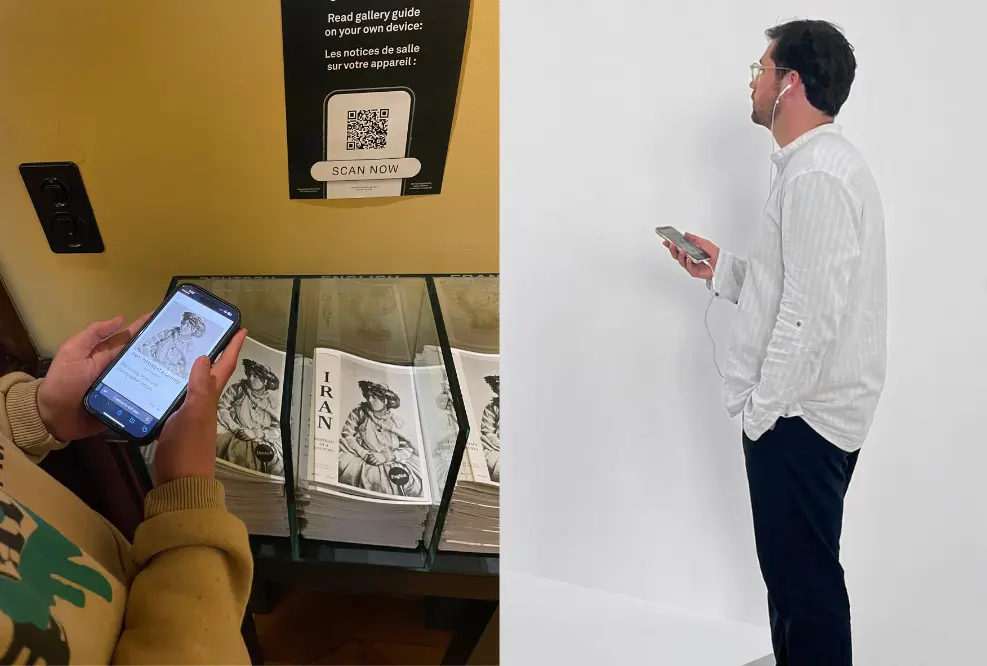
We recognize that this issue is becoming increasingly important to us and our partners. That is why we have collaborated with experts from the Swiss Federation of the Blind, among others. Thanks to their expertise, we can ensure that our educational content becomes more accessible—whether at the Migros Museum of Contemporary Art, the Gewerbemuseum Winterthur, the Museum für Gestaltung, or for the “Together Against Sexism” alliance. Our audio guides must be accessible and as inclusive as possible. In addition to compatibility with screen readers via ARIA attributes, this means, for example, the ability to integrate sign language videos into our audio and multimedia guides.
The legal framework is also changing. In the EU, for instance, the Accessibility Enhancement Act (BFSG) will apply. Digital accessibility is shifting from a “nice-to-have” to a “must-have.” Together with museums, we want to lay the groundwork and create more inclusive offerings. We look forward to learning from our users and continuously optimizing our own digital outreach offerings. This ensures that we always use the latest technology to become more inclusive.