Recent Study: Museums Compared to Other Institutions
The Institute for Museum Research has published a study on the trustworthiness of museums in Germany. How much trust do museums enjoy compared to other institutions? Museum staff are likely to be pleased.
Study Shows: The Museum Enjoys a High Level of Trust
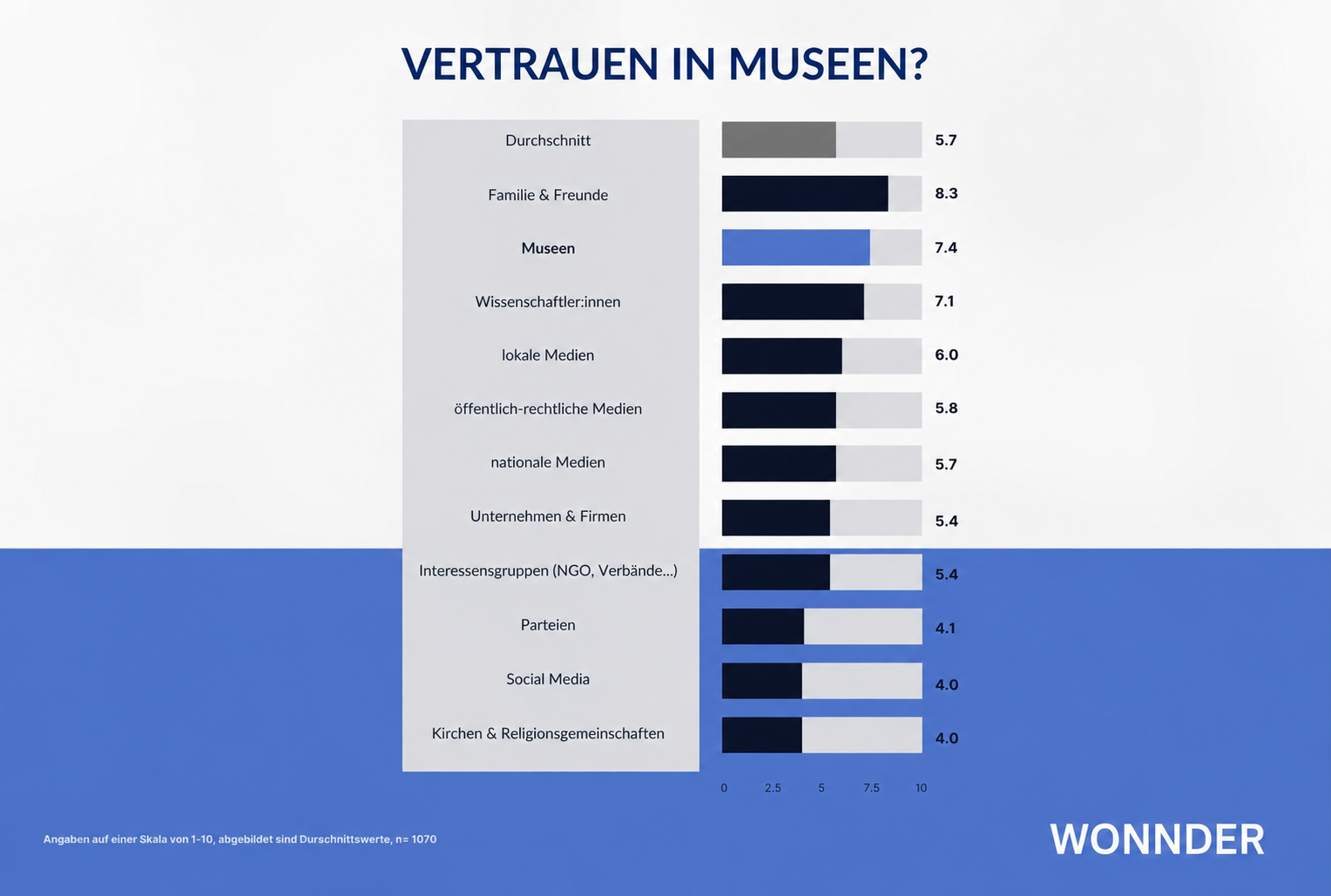
The 11 items were presented to the respondents in random order, and they were able to assign a confidence rating between 1 and 10 for each item. The overall average of all ratings submitted for all items is 5.7.
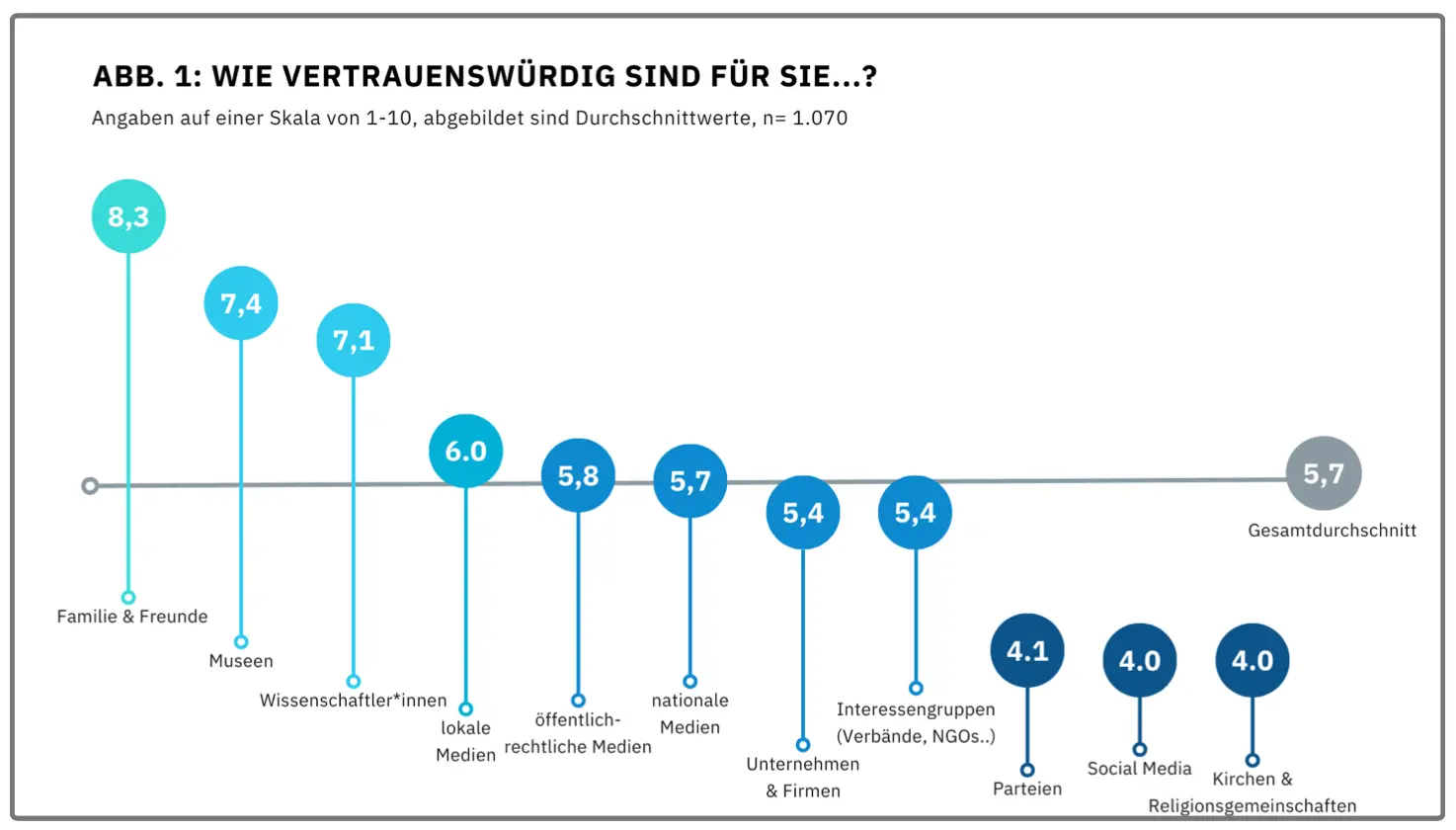
In both personal and institutional contexts, museums enjoy the highest level of trust after family and friends and ahead of scientists and the media. They have the highest trust ratings among all public institutions.
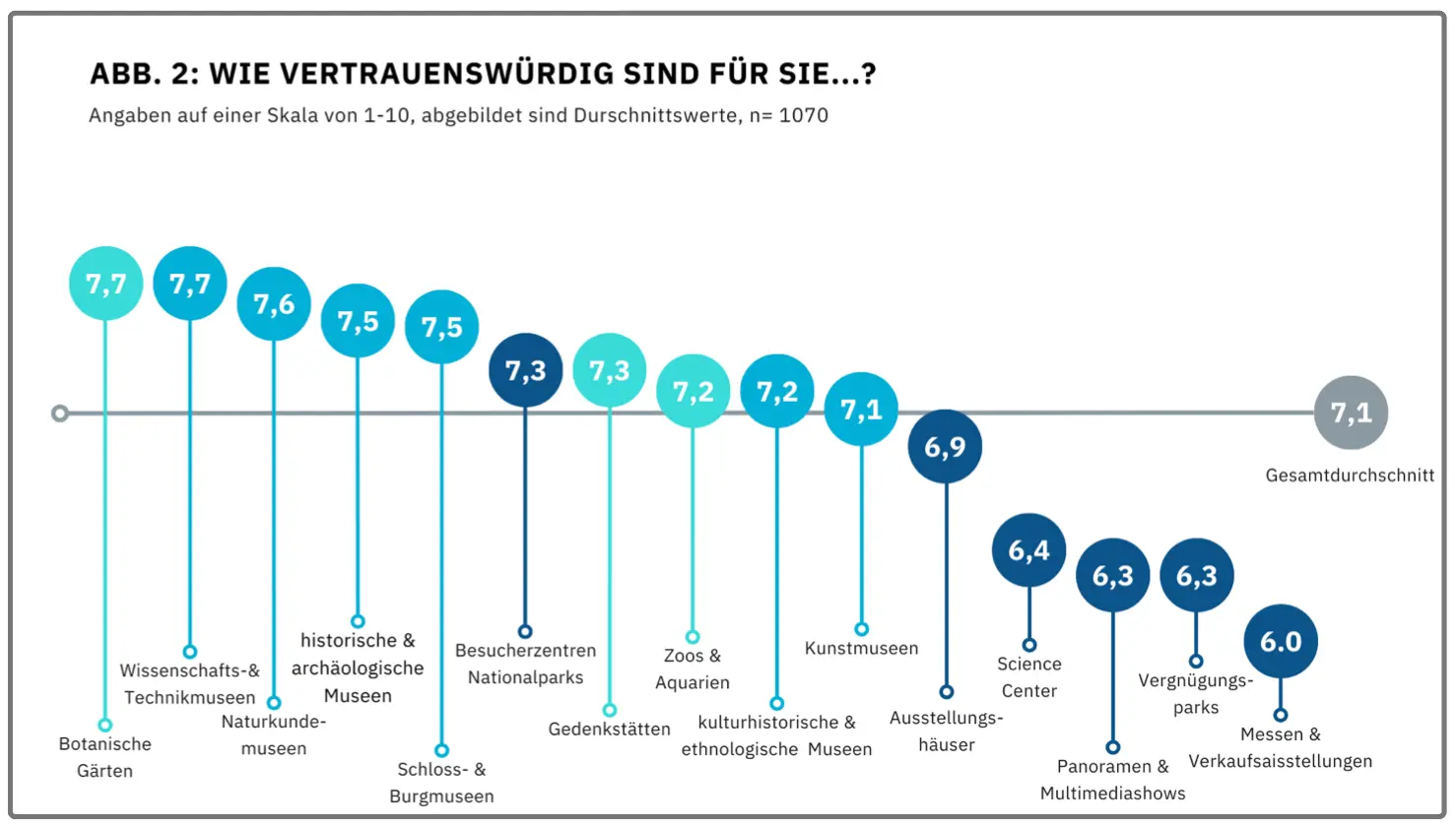
Which museums are considered particularly trustworthy? Science and technology museums, as well as botanical gardens, rank at the top of the trust scale, closely followed by natural history museums. Art museums fall in line with the average.
Why are museums important?
We need social trust to live together in complex societies. Without trust, democracy is not possible—and museums have the potential to strengthen the sense of social cohesion. This demonstrates once again the responsibility that museums and scholars bear.
How often do people go to museums?
The latest survey also examined the frequency of visits over the past 12 months. Here are the key figures:
👉 6.0% visited a museum at least once per quarter
👉 35.1% have visited a museum at least once
👉 47.7% have not visited a museum in the past 12 months
👉 5.3% of respondents never visit museums
The authors of the study note that museums enjoy a high level of trust: Even among people who do not visit museums, museums achieve a high level of trustworthiness. Nevertheless, they recognize certain patterns: The more frequently people visit, the higher the reported trust levels.
The researchers put it cautiously: However, the conclusion drawn from the data is that museums are already doing a good job in terms of content to reach their core audience. The challenge, however, lies in attracting casual visitors to the museum more frequently (and possibly also convincing people who “never” go to museums).
Taking Responsibility: Museums in the Digital Age
Resting on our laurels is certainly not an option. We need innovative approaches to make museums even more attractive— and we need to do good work to live up to the trust placed in us. As society as a whole undergoes a period of upheaval, museums can take on responsibility and ensure that they remain relevant in the future.
Patrick Karpiczenko recently described it this way in an article on culture and artificial intelligence: “Because those who miss the boat on this transformation won’t be able to help shape it and will ultimately be faced with a fait accompli.”
Source: Institute for Museum Research (Kathrin Grotz, Prof. Dr. Patricia Rahemipour)