Museum Statistics: How many people work at the museum?
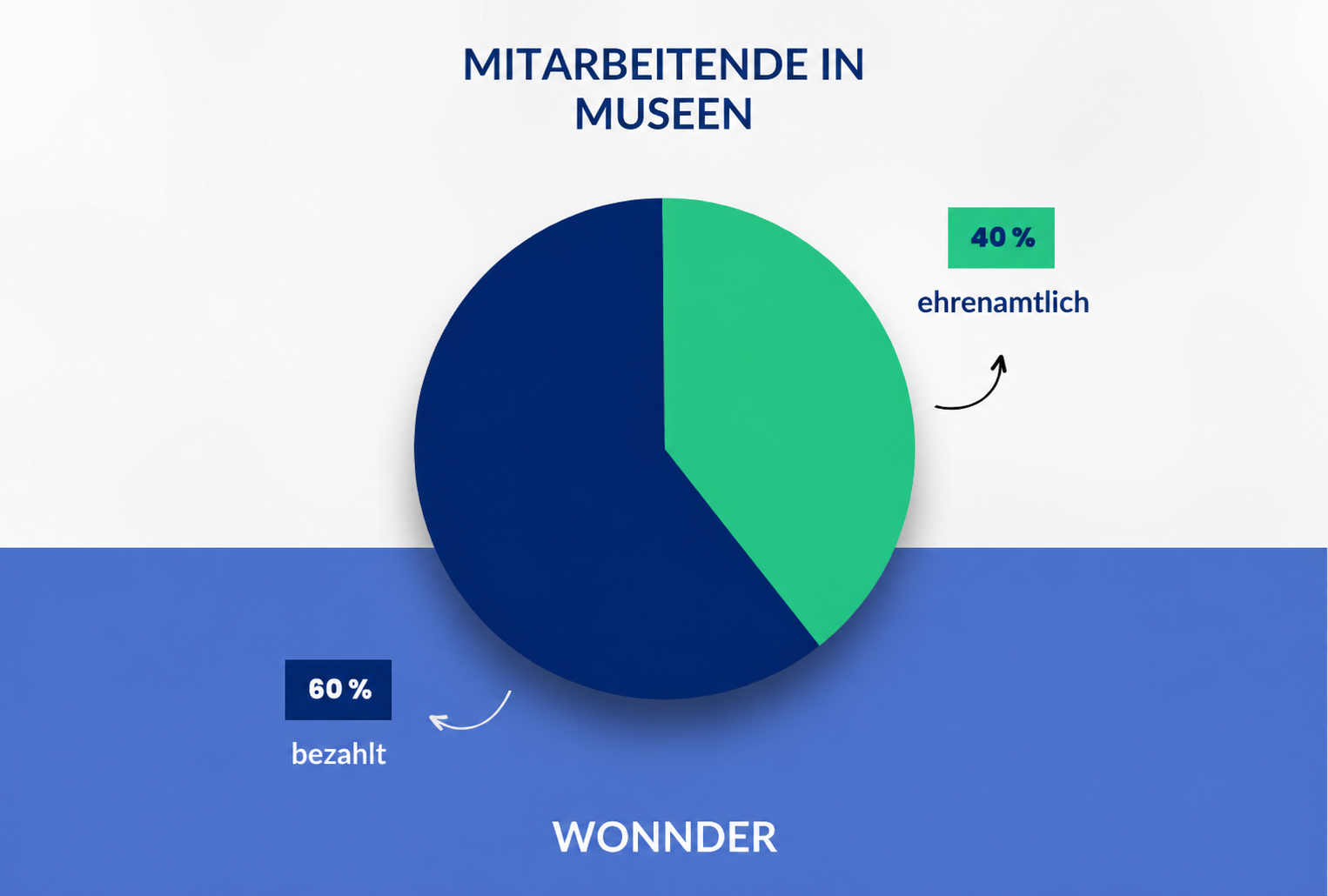
There’s a lot of talk, writing, and speculation about precarious and temporary employment. We’re taking a look: How many people work in museums? And how many of them are paid?
We’re compiling the most recent studies on museums in German-speaking countries. These studies offer fascinating statistics that provide insight into visitor numbers, background information, and organizational structures.
Volunteer Work at the Museum: 7,500 Volunteers Are on the Job
Did you know that about 40% of the staff at Swiss museums are volunteers? Around 7,500 people contribute by dedicating their time and passion to sharing culture, knowledge, and history.
Curators are probably the best known. However, most museums need a lot of support in all areas—from administration to technical operations. Here are the key figures:
Switzerland 🇨🇭
🏛 1,161 museums
In total, there are about 11,400 employees and 7,500 volunteers.
📍 The 11,400 museum employees represent just over 6,000 full-time equivalents. This indicates a high proportion of part-time employees.
👉 62% of museum employees are women. Their share is higher in art museums (68%) and somewhat lower in technical museums (50%).
To make the information even clearer, we’ve compiled it into infographics.
Significant Differences Among Museums
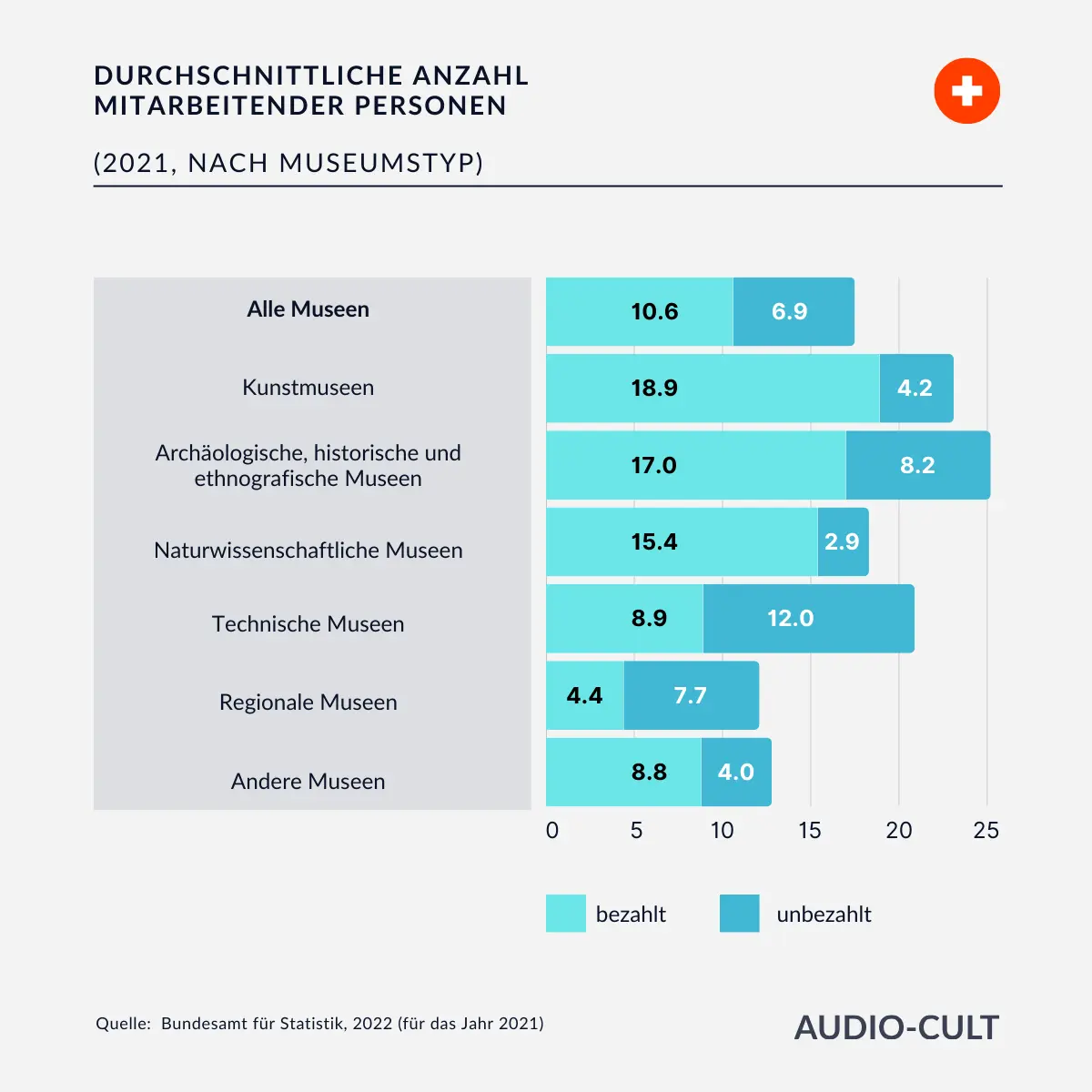
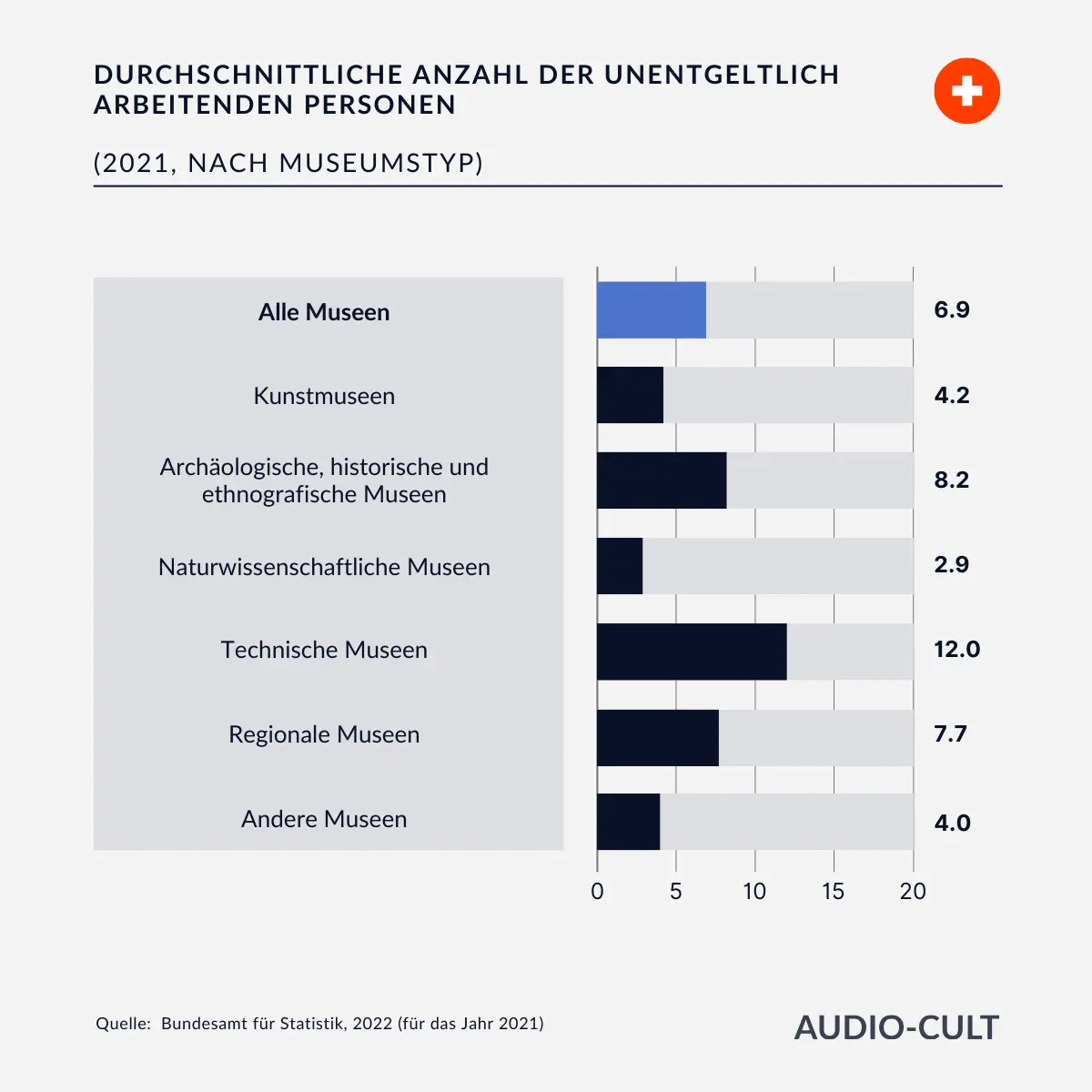

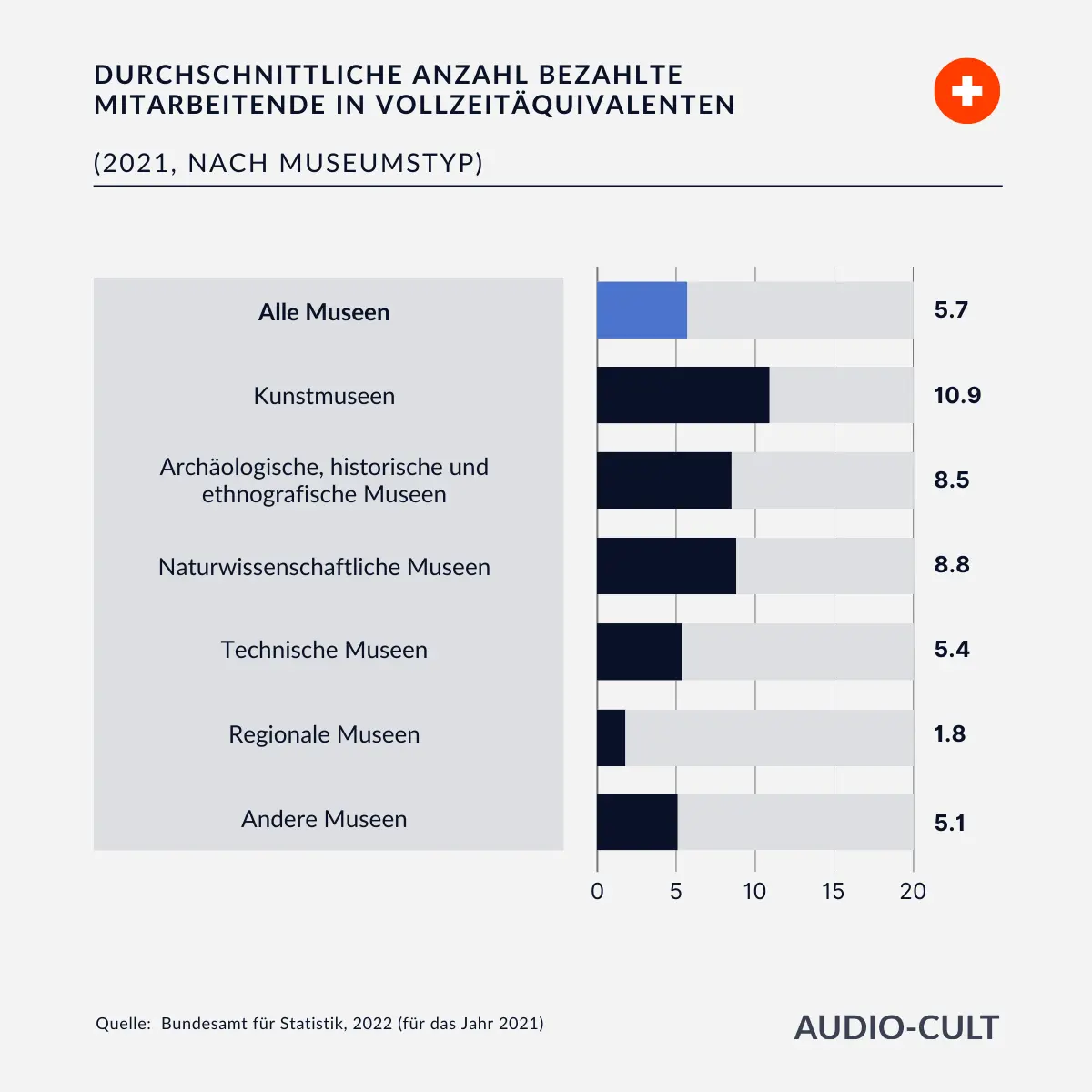
Why is this important? Because these people make cultural experiences possible! They organize guided tours, curate exhibitions, share knowledge—and much more.
To put it positively: The experience and passion of museum staff are extremely valuable and make an important contribution to society.
To put it critically: Not everyone can afford to work unpaid or part-time. The museum sector benefits from unpaid labor by saving resources while still employing qualified staff. However, this can lead to a dependence on volunteers.
In any case, I’d like to extend my heartfelt thanks to all museum staff! You are the heroes behind the scenes who keep our culture alive.
P.S. Wonnder is the new name for Audio-Cult and a web-based audio guide platform for museums that enables audio guides without an app or download.
Sources: Federal Statistical Office